As an operating foundation, we have independent and secure funding. This allows us to determine our agenda and take bold positions on policy issues.
Our Story
The WPF redefines peace through research, advocacy and engagement that creates pathways for non-violent futures.

The Nile River, Sudan (NASA/GSFC/Jacques Descloitres, 2001)
Mission
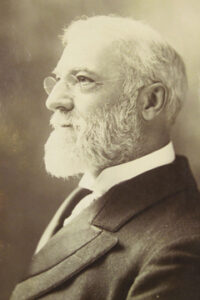
The World Peace Foundation was established by Edwin Ginn, a Boston-based publisher of educational texts and an advocate for international peace. Initially created as the International School of Peace on July 12, 1910, the WPF was tasked with educating a global audience about “the waste and destructiveness of war and of preparation for war, its evil effects on present social conditions and on the well-being of future generations.” In the language of its time, the mandate also included promoting “international justice and the brotherhood of man… peace and goodwill among all mankind.”
Today, WPF remains committed to the vision of collective action and nonviolence. It also seeks to learn from the limitations of the past by fostering more inclusive approaches to achieving and sustaining peace. Through justice-informed research, we aim to change public conversations on pressing issues related to envisioning, creating and sustaining nonviolent futures.
The WPF is solely affiliated with the Fletcher School of Global Affairs at Tufts University.
Our Values

Shadows, Yemen (Rod Waddington/Flickr, 2013)
Independent
Collaborative
We are small, so we join forces with like-minded individuals and organizations to enhance our research capabilities, amplify impact, and foster community.
Inquisitive
We critically engage with imagined solutions. Our research is grounded in the productive friction where ideas meet lived realities.
Policy-relevant
We combine research rigor with active engagement. We advocate for an inclusive approach to policymaking that extends beyond traditional decision-makers.
Justice-informed
This means accountability, above all, to the individuals and communities who are directly impacted by the issues we address. This approach guides our collaborations.
Our History
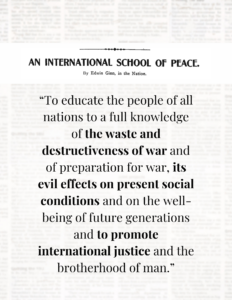
The original WPF mandate (Kelsey Henquinet/WPF, 2024)

1932 poster from the WPF archives (WPF, 2011).
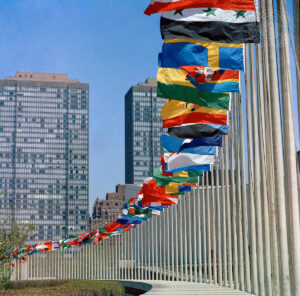
Flags of the United Nations Member States (UN Photo/Yutaka Nagata, 1969)
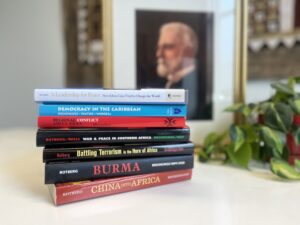
Books authored by former WPF Director, Robert Rotberg (Kelsey Henquinet/WPF, 2024)
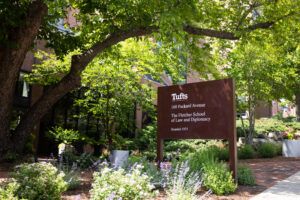
The Fletcher School at Tufts University (Jake Belcher/ Tufts University, 2023)
FAQS
Does the WPF provide grants to other individuals or organizations?
We work collaboratively with others as part of programs that we establish, but we do not support outside projects, nor do we have a research grant-making program.
Does WPF take on interns or research assistants?
Yes, we do! Through our affiliation with The Fletcher School at Tufts University, we work with many students every year – almost exclusively graduate students from The Fletcher School.
How can I become involved in the WPF’s work?
Stay in touch with us by signing up for updates, following our blog, joining us for events, and following us on social media.
Does the WPF support student activities?
Yes! Fletcher student organizations can apply for funding to support public events. Details announced via the student email list.
Is the World Peace Foundation hiring staff positions?
Hiring for the World Peace Foundation is done through Tufts University, and any available positions are posted on Tufts University platforms.
What is the World Peace Foundation?
The World Peace Foundation is a 501(c)3 private operating foundation.
How do I donate to the WPF? Are donations tax deductible?
Please contact us if you would like to make a gift. World Peace Foundation is a registered IRS-qualified 501(c)3 nonprofit organization and donations should be tax deductible, however all tax related questions should be directed to a knowledgeable tax accountant.
How do I get in touch?
Email us at worldpeacefoundation@tufts.edu